
Argo Workflows Comparisons
Neutral, detailed comparisons that help you choose the right orchestration tool for your team and workloads.
At-a-glance comparison
| Argo Workflows | Apache Airflow | Tekton | |
|---|---|---|---|
| Primary purpose | General-purpose orchestration | Data pipeline scheduling | CI/CD building blocks |
| Definition | Kubernetes YAML (or Hera) | Python | Kubernetes YAML |
| Requires Kubernetes | Yes | No | Yes |
| Execution unit | Pod per step | Task on a worker or pod | Container per step, pod per task |
| Built-in scheduling | CronWorkflow | Rich scheduler, backfills | Via CronJobs or Triggers |
| Standout strength | Parallel compute, rich DAG logic | Integrations, data intervals | Supply-chain security (Chains) |
How we write comparisons
Comparisons on this site are written to help you decide, not to declare a winner. We describe each tool on its own terms, explain the design decisions behind its strengths and weaknesses, and finish with use-case recommendations and migration notes. When a tool changes significantly — such as Airflow 3’s new architecture or Argo Workflows 4.0’s removed fields — we update the comparison and its date.
Questions to ask before choosing
- Is Kubernetes already your standard runtime, operated by a capable platform team?
- Do steps need different images, libraries or hardware such as GPUs?
- Is the work mostly calling external systems, or computing inside your cluster?
- Does your team prefer Python code or declarative configuration?
- Do you need CI-specific features such as provenance and signing?
Many organisations combine tools: Airflow for warehouse scheduling, Tekton for source-triggered CI and Argo Workflows for heavy compute. Read the detailed Argo Workflows vs Airflow and Argo Workflows vs Tekton guides.
Guides
 Comparisons
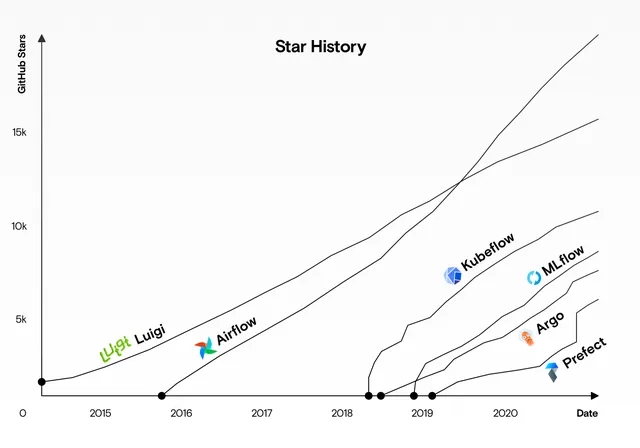
Argo Workflows vs Airflow: Which Should You Choose?
An in-depth comparison of Argo Workflows and Apache Airflow covering architecture, authoring, scheduling, scalability, Kubernetes integration, operations, cost and the best use cases for each.
 Comparisons
Argo Workflows vs Tekton: Which Fits Your CI/CD?
Compare Argo Workflows and Tekton Pipelines — resource models, execution, CI/CD features, triggers, supply-chain security, reusability, UI, operations and the best use cases for each.
 Introduction
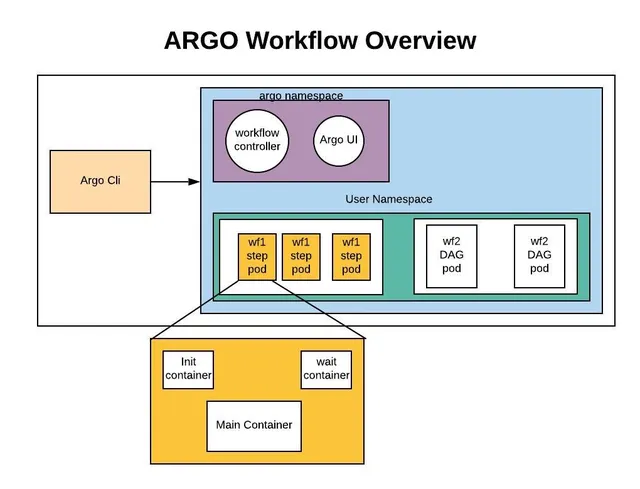
What Is Argo Workflows and How Does It Work?
Learn what Argo Workflows is, how its Kubernetes-native architecture works, the core concepts behind templates, steps and DAGs, and when it is the right engine for your pipelines.